Last week, we talked about some operationalized "definitions" of trauma, in terms of how the medical, psychological, and psychiatric professions have conceived of "PTSD" or "Posttraumatic stress disorder." But if post-traumatic stress disorder is the "definition" of trauma, what does the "T" in PTSD stand for? What is "trauma" anyway?
How can "trauma" seem to refer to the cause and the consequences?
So people were wondering what constitutes a trauma... and how PTSD and trauma could be referred to using the same word.
"Trauma" refers to both an "injury/wound" and the "conditions caused by this" (for physical and psychological "injuries").
The first known publication of the word "Trauma" in English was in 1693 in Blancard's Physical Dictionary. The definition was "a wound from an external cause."
The Oxford English Dictionary Offers This Definition of Trauma (and "traumatic")
1. Pathology. A wound, or external bodily injury in general; also the condition caused by this; traumatism.
2. Psychoanalysis and Psychiatry. A psychic injury, especially one caused by emotional shock the memory of which is repressed and remains unhealed; an internal injury, especially to the brain, which may result in a behavioural disorder of organic origin. Also, the state or condition so caused.
* * * * *
An Extensive List of Links to Definitions of TRAUMA on the Web
Most definitions focus on an "injury" or "wound" and many definitions make specific reference to the body, for example "a physical injury" or "an injury to the body."
Not as many mention emotional, psychological, or spiritual traumas, and many of the definitions focusing on bodily injury do not mention the corresponding injury to the self/mind/emotions that can accompany physical injury. Many of these are medical sites, which could account for some of the skewing towards physically-focused definitions.
Some definitions stipulate that it is "caused by an external force." How do you think this definition deals with suicide or self-cutting?
A rare few implicate "violence" as the cause of trauma. Do you think violence has to be present in order for trauma to occur?
How do you define trauma? What do you think of these definitions? Have you read other definitions?
Showing posts with label Definitions. Show all posts
Showing posts with label Definitions. Show all posts
Monday, February 4, 2008


Tuesday, January 29, 2008
Definitions
Hi everyone - Thanks for a lively discussion today on the definitions of trauma. We'll talk more about definitions of violence next week in reference to the World Health Organization Report.
As you can already see, definitions of trauma are definitely topics of lively debate. Here are the clinical definitions we brought up in class. Please free to post definitions you've found, or your own thoughts on the issue. For example, is oppression trauma? When could a person experience trauma, and not PTSD? Who would recognize this and how would it be assessed? Is poverty trauma? Death of a loved one? What is the difference between trauma and grief?
ALSO, see
http://www.veteransresources.org/forums/showthread.php?t=1197
for some thoughts on new definitions of PTSD in the DSM V!
-----------------------------------------------------------
DSM-IV-TR Criteria for PTSD
Diagnostic Classification of Mental Health and Developmental Disorders of Early Childhood Revised Edition (DC:0-3R).
Includes the above as well as a "serious threat to the physical or psychological integrity of the child" Definition now on bspace in pdf form.
The ICD-10 Classification of Mental and Behavioural Disorders
World Health Organization, Geneva, 1992
--------------------------------------------------------------------------------
F43.1 Post-Traumatic Stress Disorder
As you can already see, definitions of trauma are definitely topics of lively debate. Here are the clinical definitions we brought up in class. Please free to post definitions you've found, or your own thoughts on the issue. For example, is oppression trauma? When could a person experience trauma, and not PTSD? Who would recognize this and how would it be assessed? Is poverty trauma? Death of a loved one? What is the difference between trauma and grief?
ALSO, see
http://www.veteransresources.org/forums/showthread.php?t=1197
for some thoughts on new definitions of PTSD in the DSM V!
-----------------------------------------------------------
DSM-IV-TR Criteria for PTSD
Diagnostic Classification of Mental Health and Developmental Disorders of Early Childhood Revised Edition (DC:0-3R).
Includes the above as well as a "serious threat to the physical or psychological integrity of the child" Definition now on bspace in pdf form.
The ICD-10 Classification of Mental and Behavioural Disorders
World Health Organization, Geneva, 1992
--------------------------------------------------------------------------------
F43.1 Post-Traumatic Stress Disorder
Subscribe to:
Posts (Atom)
Trauma and Recovery

by Judith Lewis Herman
Don't Hit My Mommy
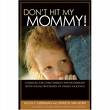
by Alicia Lieberman and Patricia Van Horn
Violence: A National Epidemic

by James Gilligan
Ayaan Hirsi Ali

from the cover of "Infidel"


