Showing posts with label Violence/Trauma colloquium. Show all posts
Showing posts with label Violence/Trauma colloquium. Show all posts
Monday, May 5, 2008


Sunday, May 4, 2008
Violence & Trauma: An Annotated Bibliography for Social Workers
If you would like to print the annotated bibliography, use the "iPaper" button at the top of the document. You can also use the buttons to zoom in or open the document in a full window so it is easier to read it online.
If you would like to download the PDF (136 pages) please click here.
If you would like to download the PDF (136 pages) please click here.
Friday, May 2, 2008
Thursday, May 1, 2008
Tuesday, February 12, 2008
Violence, Trauma, and Social Welfare Colloquium
We have confirmed that the group study will be presenting a colloquium for the Social Welfare and broader Berkeley community this spring.
Save the Date: Monday, May 5 from 4-6pm (in room 5 Haviland)
Students are invited to present for a larger audience the work that they have prepared for the group study this semester.
Save the Date: Monday, May 5 from 4-6pm (in room 5 Haviland)
Students are invited to present for a larger audience the work that they have prepared for the group study this semester.
Tuesday, February 5, 2008
Discussion Questions: "Trauma & Recovery"
Today we explored Judith Herman's text, Trauma and Recovery, with each group member focusing on a particular chapter to present to the group. Folks had really interesting insights and important critiques of the work, and we are planning to continue the discussion next week as well. People came up with some very "meaty" questions, so here's a short list of the questions that arose from the Herman readings (by chapter):
1. Can there be progression in the field of "trauma" without political movements (such as war veterans/rape survivors) to support/demand changes?
2. How else may people respond to trauma--other than the PTSD framework with clusters of symptoms: hyperarousal, constriction, intrusion?
3. Is restitution an accurate way of talking about recovery?
4. What does liberation from captivity mean for the survivor?
5. What is the role of subjectivity and objectivity in this work? Is there an appropriate role or place for subjective/"poetic" descriptions of abuse?
6. Is there a difference (or what are the differences) for individuals between a single event trauma and a repeated or prolonged trauma history?
7. What should the healing relationship (with a professional) look like?
8. Herman makes a case for creating safety first, then working on issues. What about cases in which environmental safety is not reasonably feasible (dangerous neighborhood, school, other factors)? How can we help people to increase/seek safety?
9. How can we "manage the trauma narrative" or help people open up their wounds to the degree that is is helpful and then close the session? How can we handle clients whom we may not see again who are sharing intense material? How can we respond to the "doorknob phenomenon" in which a person drops an emotional bomb just before leaving the office?
10. What is the process of healing like when it isn't as "neat and rosy" as Herman describes in her optimistic and strengths-based description?
11. Herman proposes setting up groups for people who have experienced trauma as time-limited, and distinct in terms of task (safety, reconnection, etc). How might this design impact participants? What is the relevance of group continuity, and should support groups be designed to stay together as cohesive units through the healing process rather than being segmented in chunks?
* A recurring question/critique of Herman's work was her use of gender pronouns: particularly the word "she" was used to refer to victims and helpers, and "he" to refer to soldiers. Does this leave out male survivors of violence and trauma (especially sexual abuse)? Does this "essentialist" framework with the gender pronouns reflect a bias on Herman's part? Does it bias the reader in terms of what groups of people are readily accepted as "victims/survivors"?
1. Can there be progression in the field of "trauma" without political movements (such as war veterans/rape survivors) to support/demand changes?
2. How else may people respond to trauma--other than the PTSD framework with clusters of symptoms: hyperarousal, constriction, intrusion?
3. Is restitution an accurate way of talking about recovery?
4. What does liberation from captivity mean for the survivor?
5. What is the role of subjectivity and objectivity in this work? Is there an appropriate role or place for subjective/"poetic" descriptions of abuse?
6. Is there a difference (or what are the differences) for individuals between a single event trauma and a repeated or prolonged trauma history?
7. What should the healing relationship (with a professional) look like?
8. Herman makes a case for creating safety first, then working on issues. What about cases in which environmental safety is not reasonably feasible (dangerous neighborhood, school, other factors)? How can we help people to increase/seek safety?
9. How can we "manage the trauma narrative" or help people open up their wounds to the degree that is is helpful and then close the session? How can we handle clients whom we may not see again who are sharing intense material? How can we respond to the "doorknob phenomenon" in which a person drops an emotional bomb just before leaving the office?
10. What is the process of healing like when it isn't as "neat and rosy" as Herman describes in her optimistic and strengths-based description?
11. Herman proposes setting up groups for people who have experienced trauma as time-limited, and distinct in terms of task (safety, reconnection, etc). How might this design impact participants? What is the relevance of group continuity, and should support groups be designed to stay together as cohesive units through the healing process rather than being segmented in chunks?
* A recurring question/critique of Herman's work was her use of gender pronouns: particularly the word "she" was used to refer to victims and helpers, and "he" to refer to soldiers. Does this leave out male survivors of violence and trauma (especially sexual abuse)? Does this "essentialist" framework with the gender pronouns reflect a bias on Herman's part? Does it bias the reader in terms of what groups of people are readily accepted as "victims/survivors"?
Subscribe to:
Posts (Atom)
Trauma and Recovery

by Judith Lewis Herman
Don't Hit My Mommy
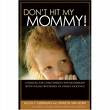
by Alicia Lieberman and Patricia Van Horn
Violence: A National Epidemic

by James Gilligan
Ayaan Hirsi Ali

from the cover of "Infidel"


